
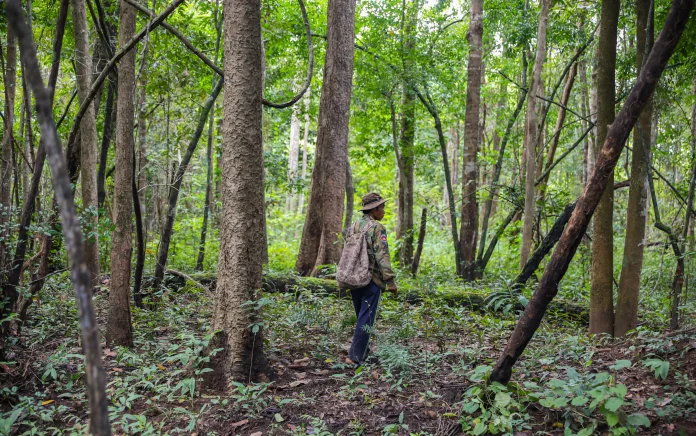
While hunting is a historic practice in Southeast Asia, rising commercial pressure and cheaper poaching methods are emptying forests faster than they can replenish, hurting human and forest health.
Editor’s Note: This article is one of two stories that delves into how Southeast Asia’s wildlife consumption affects human and forest health, with implications for biodiversity and future pandemics.
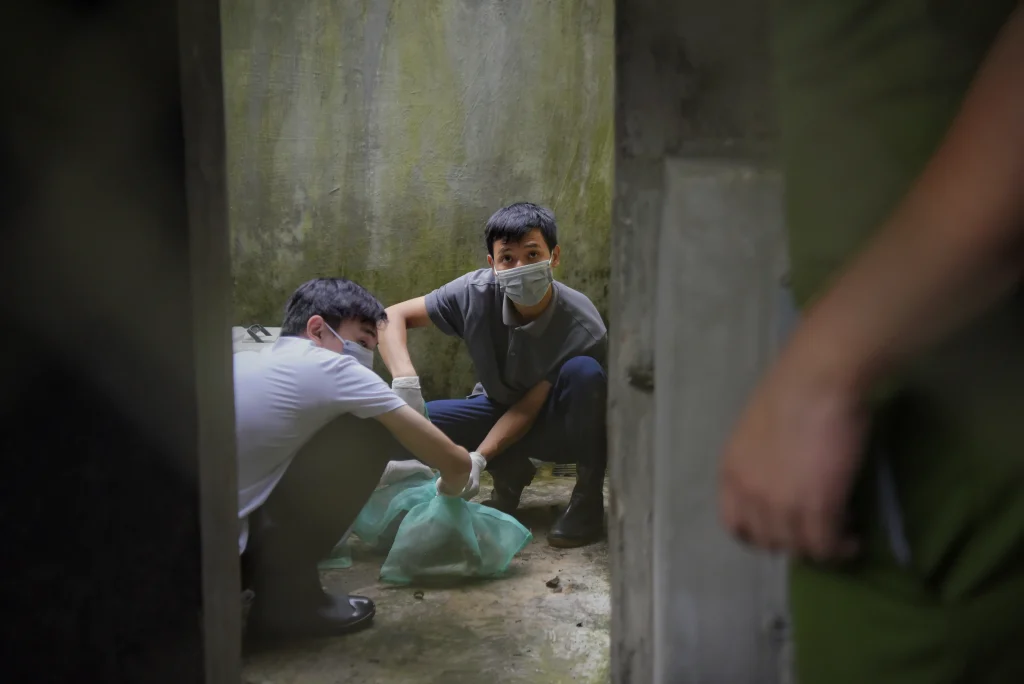
They were brought into the wildlife rescue centre not in cages, but in fine-mesh bags, as though already fresh meat waiting to be sold by the gram.
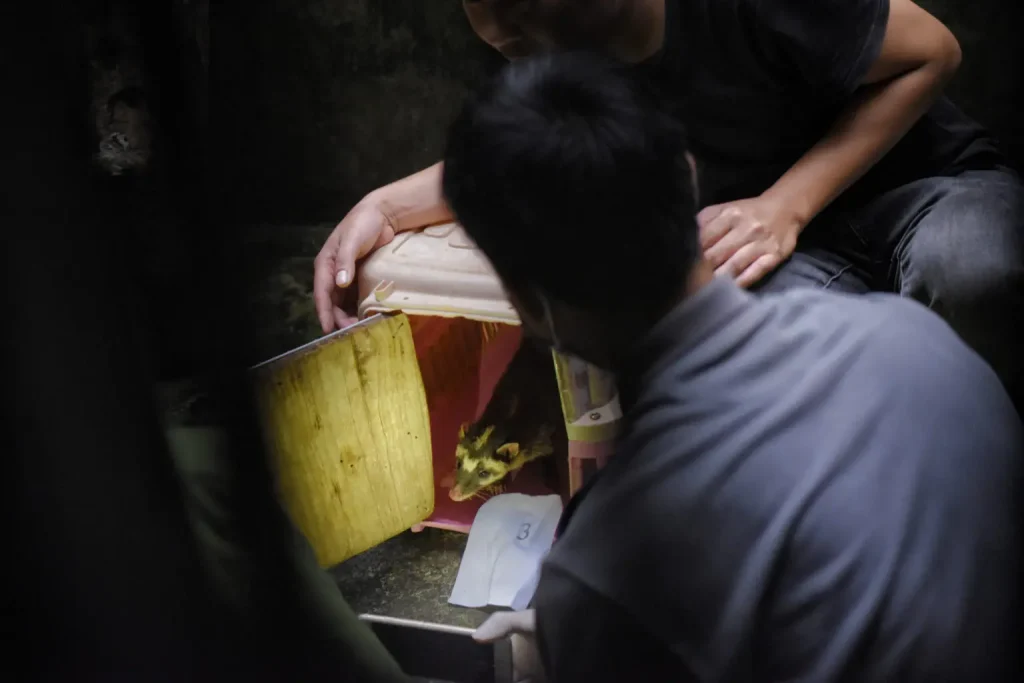
But the four ferret badgers were kicking and hissing as staff from Save Vietnam’s Wildlife, a conservation group, worked to free them.
Local police seized the animals from a restaurant and took them to the group’s facility in Cuc Phuong National Park, about a two-hour drive from Hanoi and the oldest national park in the country.
“The restaurant bought them from people who caught them from the forest,” said Tran Van Truong, the captive coordinator in charge of the centre. “They are a bit stressed out now, but they seem okay otherwise. We can probably release them back into the wild after a few days.”
Trapping wild animals for bushmeat is illegal in Vietnam, though the practice is still widespread. In other parts of Southeast Asia, Covid-19 and its probable origins in the wildlife trade has had little impact on the region’s snaring crisis.
In the wake of the pandemic, wild animals are still being hunted to be eaten or kept as pets. Based on Southeast Asia Globe and The Straits Times’ observations in more than 30 interviews with conservationists, scientists, rangers and government officials, Southeast Asia’s forests are emptying of wildlife faster than they can replenish. And it’s inching towards local extinctions across the region.
In Vietnam’s Ho Chi Minh City, monkeys, snakes, boars and birds are sold at various markets. Wild porcupine and deer are found on restaurant menus in the country’s Central Highlands, and so are wild birds.
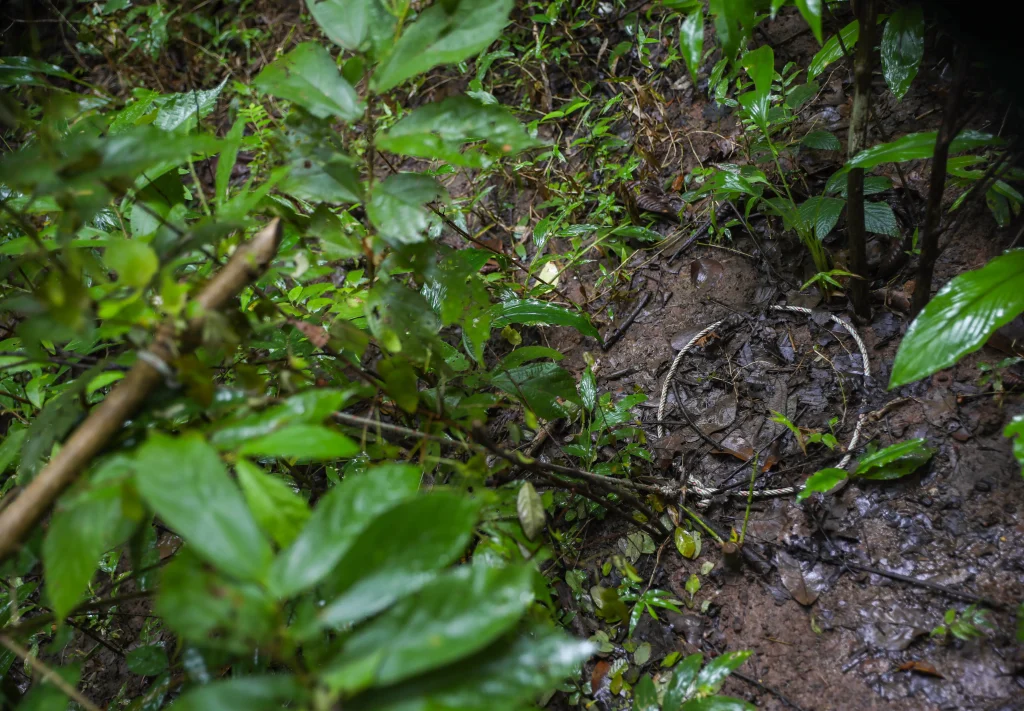
In northern Cambodia, the extent of the snaring problem is tied directly to how the traps are becoming easier and cheaper to set. This is causing the forests of Preah Vihear province to be emptied out so quickly that protected areas, like Phnom Tnout Wildlife Sanctuary, once rowdy with the cackle of hornbills and the howls of gibbons, have become eerily silent.
Subsistence hunting is an age-old tradition, especially in regions where communities rely on natural resources. Growing up in a village near the forest in Vietnam’s Ninh Binh province, Tran recalled how his neighbours hunted wild animals for food.
“When locals hunt for themselves, only a limited number of animals are taken from the forest, But when commercial reasons come in, when people want to earn money by selling the animals to other cities or countries, they take more animals to sell to others.” Tran
Stripping forests of wildlife can have profound impacts on delicate ecosystems that have been forming over millennia. And this depletion of wildlife negatively affects humans as well, experts say.
Tran recalled one particular rescue that illustrates the scale of the problem.
After joining Save Vietnam’s Wildlife in 2017, he went on a rescue mission to save more than 100 pangolins, which are hunted for their scales to be used in traditional medicine in China and throughout Asia.
It is still the largest rescue of its kind to date, Tran said, adding that the size of the rescue indicates the true scale of the problem.
“When animals are hunted in such large numbers, it makes the forest go silent,” he said.
A 2014 report by the Centre for International Forestry Research also noted that commercial poaching which supplies regional markets and beyond with bushmeat and traditional medicinal products, has endangered wildlife, especially mammals, which have reduced densities of wildlife in many Southeast Asian countries.
Experts have warned that the continued trade in wild animals, endangered or not, increases the risk of diseases jumping from animals to humans. And tropical forests depleted of seed-dispersers, such as birds and monkeys, could mean fewer trees, making these carbon-storing habitats less of an ally in humanity’s struggle to tackle climate change.
Recipe for a pandemic
Wearing gloves and a surgical mask, Save Vietnam’s Wildlife veterinarian Tran Nam Trieu examined a group of ferret badgers to ensure they had no other injuries.
The wild animals that come through the centre’s gates are often wounded, even missing limbs, mostly from poachers’ traps. The bodies of the four ferret badgers bore no obvious wounds, though Trieu said the hissing and growling indicated a high level of stress.
Once the animals calm down, they will be examined more thoroughly Tran Nam Trieu said.
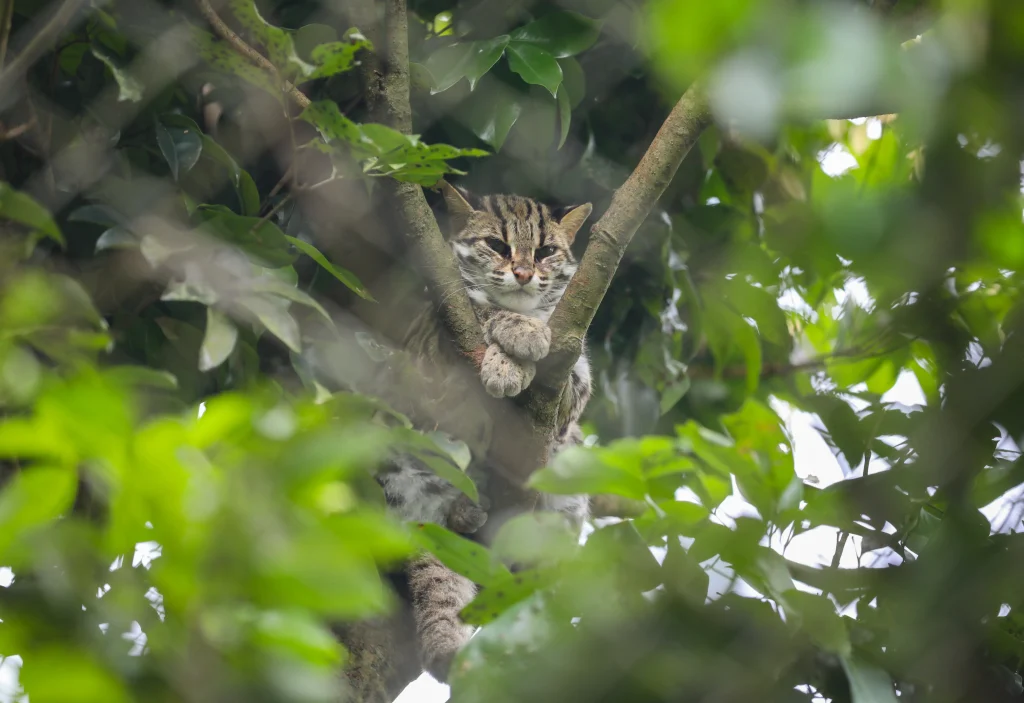
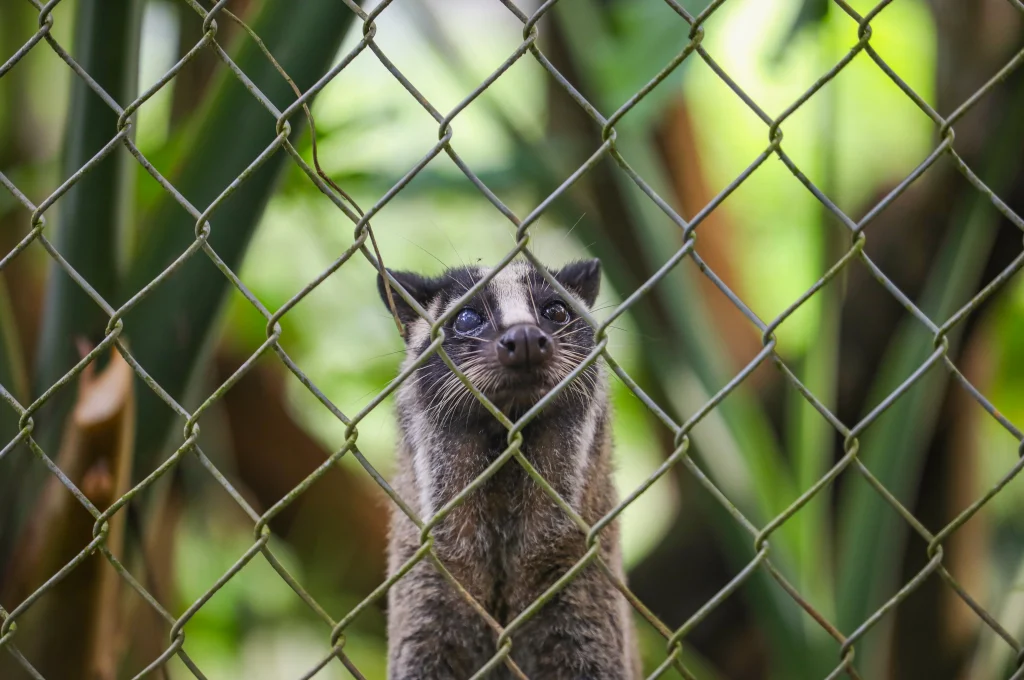
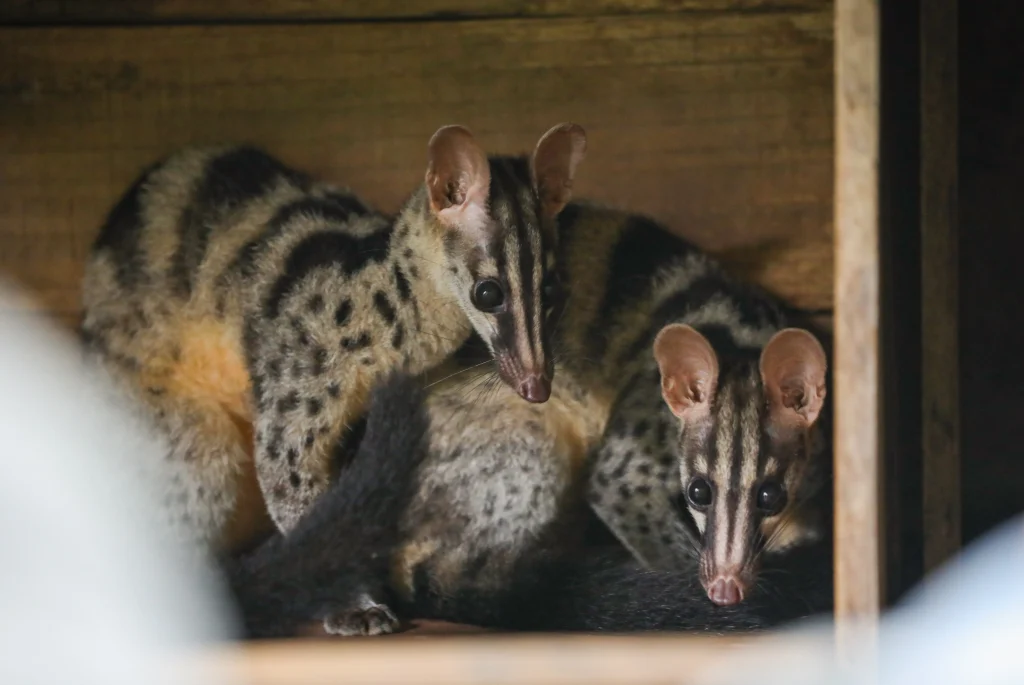
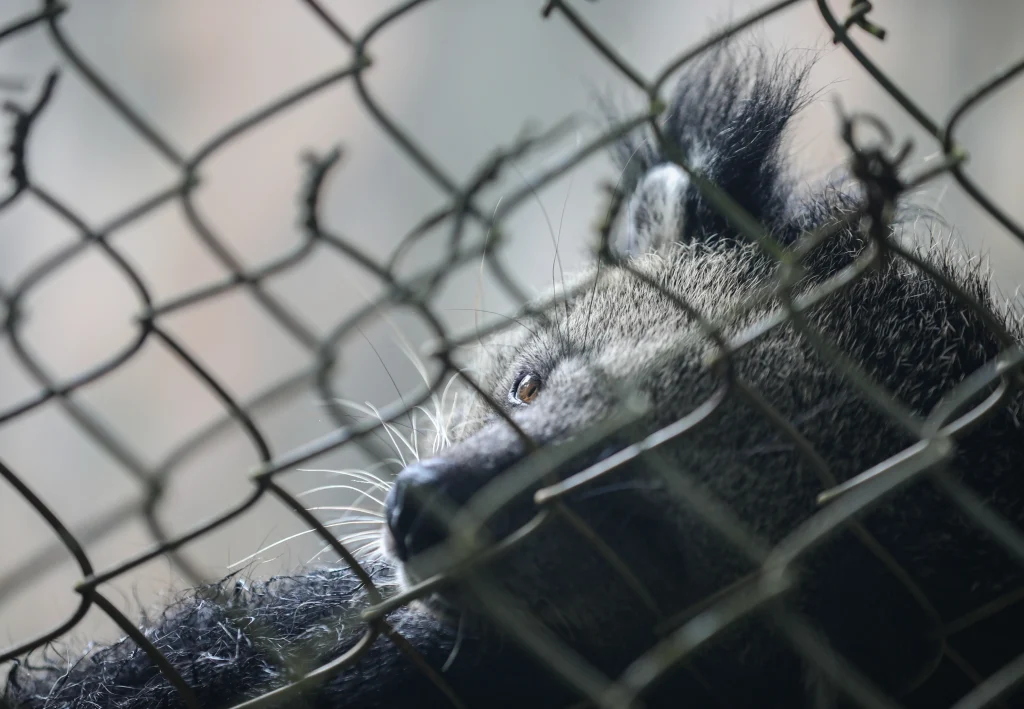
But for the next 30 days, the ferret badgers will be placed in quarantine, each in their own holding cell, to ensure that any diseases they may have are not spread to the other animals in the facility.
Besides the quarantine policy, the facility implements multiple biosecurity measures to reduce the potential spread of diseases among wildlife, and between the animals and humans. Buckets of disinfectant were spread throughout the facility. Before entering the building, visitors must wear boots in specific parts of the facility, such as the wildlife quarantine area.
But the health practices at the rescue centre could not be more different to how wild animals are handled elsewhere in the region.
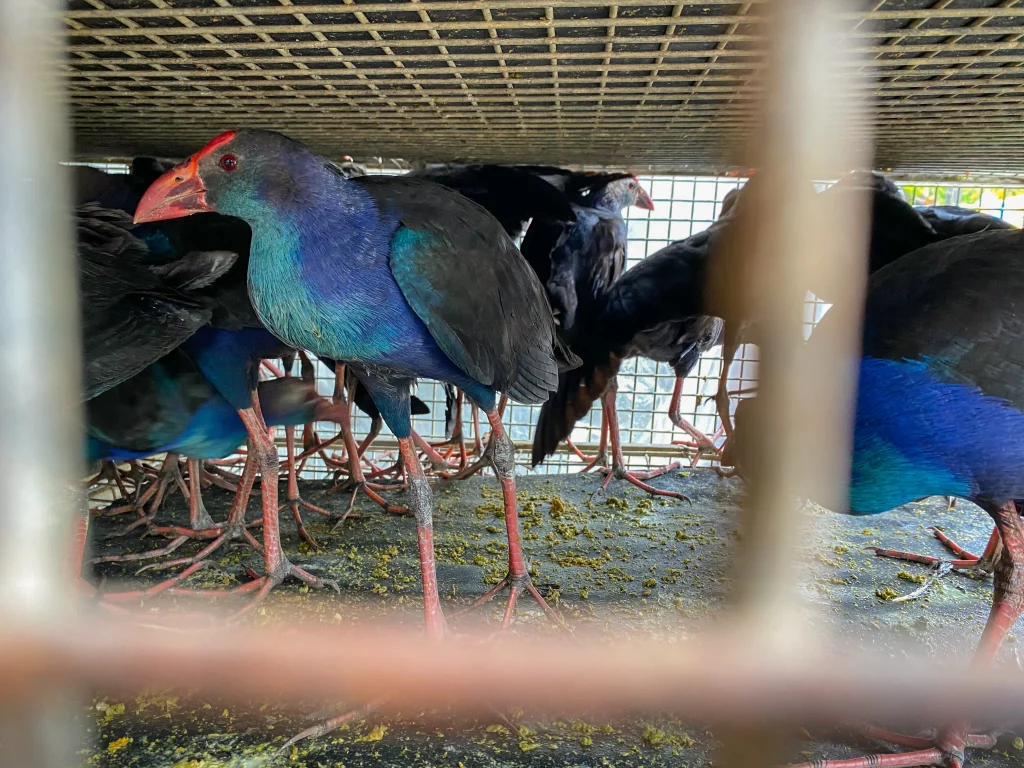
At the wet markets in Ho Chi Minh City where wildlife is sold, many animals were packed into small cages — with some wild birds seen trampling carcasses left in the crate — and the sellers often handled them with no protective equipment.
“Wildlife markets are an ideal landscape for zoonotic disease transmission because they have a combination of diverse wildlife species, housed in high densities, in poor biosafety conditions,” said Debby Ng, a wildlife disease ecologist at the National University of Singapore’s Centre for Nature-based Climate Solutions. “Motivations for hunting and wildlife trade can be diverse even within countries. It is important to learn these motivations and provide feasible alternatives that can address the needs of the people involved in the trade.”
Authors:

Audrey Tan
Southeast Asia RJF Advisory Committee Member

Anton L. Delgado
Rainforest Investigations Fellow

Mark Cheong
Southeast Asia RJF Grantee